Smelly gas from probiotics: why it happens and what to do
Short answer
No source we checked shows that probiotics change how gas smells. MedlinePlus says most gas has no odor; the smell comes from bacteria in the large intestine releasing small amounts of sulfur gases. Cleveland Clinic traces most foul gas to food, including high-sulfur foods such as broccoli, eggs and meat. Check what changed in your meals, and see a provider if it lasts.
Key facts
- "Most of the time gas does not have an odor." The odor comes from bacteria in the large intestine that release small amounts of gases containing sulfur. [MedlinePlus]
- People with flatulence may feel it has an unpleasant odor, which may be due to sulfur in the gas. [NIDDK]
- High-sulfur foods include broccoli, Brussels sprouts, cauliflower and cabbage, along with eggs, garlic, meats, nuts, onions, beer and wine. [Cleveland Clinic]
- Some probiotics produce gases as byproducts; a sudden rise can mean more bloating and gas that "should resolve within a few days." That line is about the amount of gas, not its smell. [Cleveland Clinic]
- Excessive or smelly wind can be a side effect of some medicines, among them ibuprofen and other NSAIDs, some laxatives, antifungal medicines and statins. [NHS]
- If you have been passing more gas than usual, or are concerned about the way it smells, talk to a healthcare provider. [Cleveland Clinic]
Why does gas smell? What MedlinePlus and NIDDK say
Sulfur. Most of the gas you pass has no smell; the odor comes from small amounts of sulfur-containing gases that bacteria in the large intestine give off, MedlinePlus says.
NIDDK explains where intestinal gas comes from: air you swallow, and bacteria in the large intestine breaking down sugars, starches and fiber that the stomach and small intestine did not fully digest. On the smell, it is brief:
"The odor may be due to sulfur in the flatus."
NIDDK, Symptoms and Causes of Gas in the Digestive Tract
Cleveland Clinic gastroenterologist Christine Lee, MD, names the compound: digestion sometimes produces hydrogen sulfide, which can add a rotten-egg odor. She also points out that gut chemistry differs from person to person, so some people's bacteria naturally make gas that smells a bit stronger. MedlinePlus makes the same point about amount: foods that produce gas in one person may not cause gas in another.
Do probiotics make gas smell worse?
None of the sources we checked says they do. What sources describe after starting a probiotic is more gas, for a short time, not a change in how it smells.
Cleveland Clinic writes that some probiotics produce gases in the gut as byproducts, and that a sudden rise in them can bring more bloating and gas during digestion, which should settle within a few days. That passage is about volume. It does not mention odor, and this page does not read it as covering smell.
Hard numbers are missing in general. NCCIH notes that few studies have looked at the safety of probiotics in detail, so solid information on how often side effects happen, and how severe they are, is lacking. Physician's Choice uses this summary of the NIH view: According to the NIH Office of Dietary Supplements, probiotics are generally well tolerated by healthy people, though they may cause mild digestive symptoms, such as gas. Probiotics may not be appropriate for everyone, particularly people who are seriously ill or have weakened immune systems. Talk with your healthcare provider before use.
How much extra gas is usual at the start, and when to stop, is covered in gas in the first weeks of a probiotic.
What could be behind smellier gas, and what to try
Start with what else changed the week the smell did. Each row takes one likely contributor, what a source says about it, and what that source suggests trying.
| Likely contributor | What a source says | What to try | Source |
|---|---|---|---|
| High-sulfur foods | Broccoli, Brussels sprouts, cauliflower and cabbage are high in sulfur; so are eggs, garlic, meats, nuts, onions, beer and wine. Many cheeses are too | Change your diet and avoid the foods that set it off; do not eat too many foods that are hard to digest | Cleveland Clinic; NHS |
| Beans, lentils and dried fruit | Many beans hold carbohydrates and sugars that do not digest easily; breaking them down can lead to fermentation and a smelly result. Pulses, dried fruit and onions are on the NHS list of foods that can make you fart | Eat smaller meals, more often | Cleveland Clinic; NHS |
| Dairy, if lactose is a problem | An intolerance or sensitivity to lactose can bring digestive distress and strong-smelling gas | Avoid milk products if you have lactose intolerance | Cleveland Clinic; MedlinePlus |
| Sugar alcohols and sweeteners | The body cannot fully absorb many low-calorie sweeteners, and the gas that results "can be rather rancid." Sorbitol is on the NHS list | Check ingredient lists for sorbitol and other sweeteners; do not chew gum | Cleveland Clinic; NHS |
| More fiber than usual, from food or a supplement | Bacteria in the large intestine break down fiber and create gas; a large amount of fiber in a short time can cause gas that often fades once gut bacteria adjust. Neither source mentions smell | Add fiber slowly, not all at once | NIDDK; MedlinePlus |
| A probiotic you just started | Some probiotics produce gases as byproducts; the extra gas and bloating should resolve within a few days. Smell is not mentioned | Take it as recommended on the label | Cleveland Clinic |
| A medicine | Excessive or smelly wind can be a side effect of NSAIDs such as ibuprofen, some laxatives, antifungal medicines and statins. Antibiotics are among the common causes of gas | Do not stop or change your medicine without speaking to a doctor first | NHS; MedlinePlus |
| Constipation | Constipation is on the NHS list of conditions behind excessive or smelly farts, and Cleveland Clinic says a backlog of stool does not help the odor | See our guide below on constipation after a new probiotic | NHS; Cleveland Clinic |
Sources: Cleveland Clinic, the NHS, NIDDK and MedlinePlus, read on Oct 10, 2026. Links below. The rows describe foods, medicines and probiotics in general, not one product. For harder stools after a new probiotic, see can probiotics cause constipation?
What can you do about smelly gas?
Mostly, change what and how you eat, then give it time. Cleveland Clinic says the problem usually takes care of itself when food or a medicine is behind it.
- Look at your plate first. Dr. Lee says the symptoms should disappear once the offending item works through your system.
- Eat smaller meals, more often. Eat and drink slowly, with your mouth closed, the NHS says.
- Drink water, not fizz. MedlinePlus suggests lots of water and non-fizzy drinks, and eating more slowly so you swallow less air.
- Go easy on beer, wine and fruit juice. The NHS also says not to smoke or chew gum, and to exercise regularly.
- Keep a short food log. Cleveland Clinic says a provider may ask you to keep a journal of what you eat and drink to see whether something in your meals is causing the extra gas.
- Ask a pharmacist. The NHS says a pharmacist can tell you whether something you can buy may help, such as simethicone, or underwear and pads that absorb smells, and whether to see a doctor.
Thinking of peppermint oil, ginger or magnesium instead? See supplements for bloating for what sources say about each.
How long does smelly gas last?
When a food or a medicine is the cause, until it has passed through, Cleveland Clinic says. No source we checked gives a time for a probiotic and smell.
Cleveland Clinic's "within a few days" for a new probiotic describes extra gas and bloating. It says nothing about odor, so it is not a timeline for smell. The signal to act is persistence: Dr. Lee advises talking to your healthcare provider if bad gas continues for an extended period, and the NHS says to see a GP if farting is affecting your life after self-help and pharmacy products have not worked.
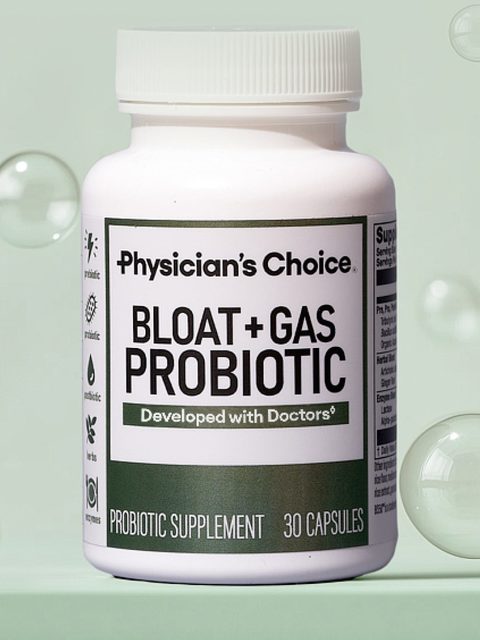
Where Bloat + Gas Probiotic fits
Physician's Choice, which publishes this site, makes Bloat + Gas Probiotic. Its label lists a 325 mg pre, pro and postbiotic blend of tributyrin (CoreBiome), B. subtilis OPTIBIOME BS50 at 2 billion CFU and organic acacia; a 50 mg herbal blend of artichoke leaf and ginger; and a 36 mg enzyme blend that includes alpha-galactosidase. The sources and the table on this page cover foods, medicines and probiotics in general, not this formula. What the BS50 strain trial measured is in our answer on the strains studied for bloating.
The label, blend by blendGet medical care soon if smelly gas comes with
- Belly pain and cramps, or diarrhea
- Bleeding from your anus, or blood in your poo
- A fever, or a skin rash
- Weight dropping when you are not trying
- A stomach ache or bloating that will not go away or keeps coming back
- Oily, foul-smelling or bloody stools
From Cleveland Clinic's page on flatulence, the NHS page on farting and MedlinePlus. Cleveland Clinic also says to talk to a provider if you are passing more gas than usual or are concerned about the way it smells.
How we put this together
- What people asked. Of 1,031 public Reddit posts from 228 communities, September 5 to October 5, 2026, 225 were about gas and burping, and 31 of those mentioned a smell; two of the 31 were also tagged as probiotics posts. One person, posting in two communities, described bad-smelling gas for two weeks after adding kimchi.
- The question. "Smelly gas from probiotics", and the two ways searchers put it next: why probiotics make gas smell, and what to do about it.
- Sources. MedlinePlus, NIDDK, Cleveland Clinic, the NHS, NCCIH and NIH's Office of Dietary Supplements, opened on Oct 10, 2026. Quotes are copied from each page.
- Label and wording. One confirmed fact from the Bloat + Gas Probiotic label. The NIH summary and the three lines in the note above are Physician's Choice's approved wording, used word for word.
- Recheck. The Last checked date at the top changes with every recheck.
Short answers
- Why do my farts smell like rotten eggs?
- Usually hydrogen sulfide. Cleveland Clinic says digestion sometimes produces it, adding a rotten-egg odor, and MedlinePlus says the smell of gas comes from small amounts of sulfur-containing gases released by bacteria in the large intestine. High-sulfur foods such as broccoli, eggs and meat can add to it.
- Should I stop my probiotic if my gas smells bad?
- Look at what else changed first. No source we checked links probiotics to a change in smell, and Cleveland Clinic says food or a medicine is the usual reason. If the smell lasts, ask your healthcare provider. Stop the product and get medical advice for any reaction that worries you.
- Can fiber supplements make gas smell worse?
- The sources we checked tie fiber to more gas, not to a stronger smell. NIDDK says bacteria in the large intestine break down fiber and create gas, and MedlinePlus says a big jump in fiber can cause gas that often fades once gut bacteria adjust. Its advice is to add fiber slowly.
- When is smelly gas a reason to see a doctor?
- Cleveland Clinic says to seek care as soon as possible when gas comes with belly pain and cramps, diarrhea, bleeding from the anus, fever, a skin rash or weight dropping without trying. The NHS adds farting that affects your life after self-help and pharmacy products, and MedlinePlus lists oily, foul-smelling or bloody stools.
Read next
- Do probiotics help sulfur burps? What the evidence shows, and what it does notRotten-egg burps and what was tested.
- Do probiotics help you digest lactose? Yogurt cultures, supplement trials and lactose intoleranceWhat yogurt cultures do with lactose.
- Gas in the first weeks of a probiotic: what is normal and when to stopHow much early gas is usual, and when to stop.
- Can probiotics cause constipation? What sources say and what to doHarder stools after a new probiotic.
- Can probiotics cause diarrhea or loose stools?Looser stools, their time frame, and when to call a doctor.
- What is the best probiotic for bloating? The strains studied, and how long to try oneStrains, trial lengths and the BS50 study.
- Supplements for bloating: which have evidence, and which habits come firstPeppermint oil, ginger, magnesium, and habits first.
Sources
- MedlinePlus: Gas (health topic)Opened Oct 10, 2026.
- NIDDK: Symptoms and causes of gas in the digestive tractLast reviewed June 2021. Opened Oct 10, 2026.
- Cleveland Clinic Health Essentials: Why do farts smell and what does that say about your health?With gastroenterologist Christine Lee, MD. May 2, 2022. Opened Oct 10, 2026.
- Cleveland Clinic: Flatulence (farting)Last updated 08/22/2026. Opened Oct 10, 2026.
- NHS: Farting (flatulence)Page last reviewed 02 April 2026. Opened Oct 10, 2026.
- Cleveland Clinic: ProbioticsOpened Oct 10, 2026.
- NCCIH: Probiotics, usefulness and safetyOpened Oct 10, 2026.
- NIH Office of Dietary Supplements: Probiotics, fact sheet for consumersUpdated November 17, 2025. Opened Oct 10, 2026.
- MedlinePlus Medical Encyclopedia: FiberReview date 7/22/2026. Opened Oct 10, 2026.
- MedlinePlus Medical Encyclopedia: Gas, flatulenceReview date 4/27/2026. Opened Oct 10, 2026.
- Physician's Choice: Bloat + Gas Probiotic Supplement Facts panel, on the product page at physicianschoice.comLabel fact checked Oct 10, 2026.